
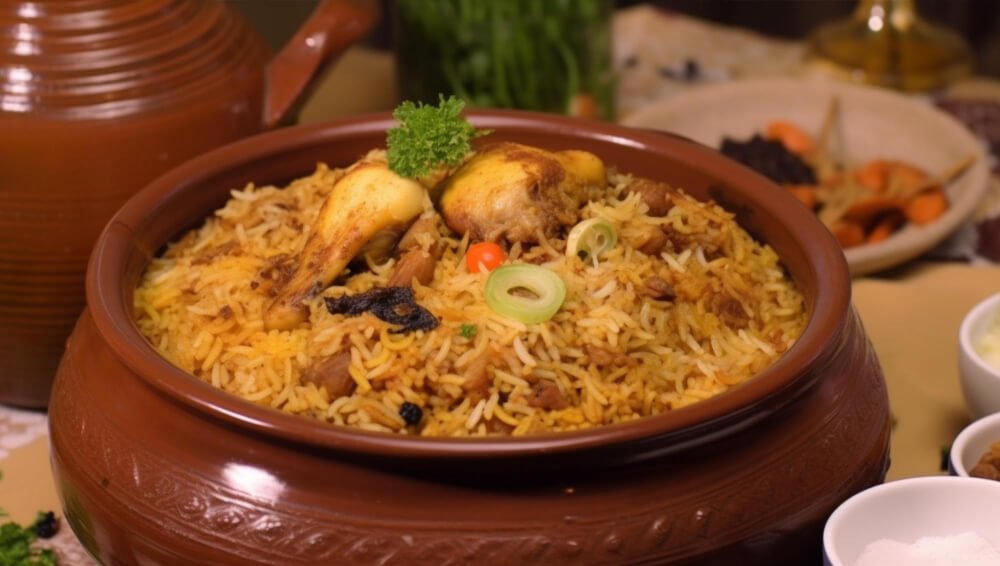
While biryani is celebrated across the Indian subcontinent as the pinnacle of celebration dining, no two regional preparations are identical. The world of royal Indian rice dishes is shaped by three distinct culinary traditions: the bold and royal Nizami kitchens of Hyderabad, the refined Nawabi court of Lucknow (Awadh), and the heritage kitchens of Kolkata. While each style traces its lineage to historical royal courts, their cooking techniques, spice blends, and aromatic philosophies differ completely. Understanding Authentic Hyderabadi Dum Biryani vs regular biryani styles comes down to how spices, meats, and rice interact under pressure. At Deccan Delights, our kitchen honors the true Nizami tradition of slow-cooked Dum Pukht dining, bringing uncompromised regional flavors to Ottawa diners.
Hyderabadi Biryani: The Bold, Fiery Crown Jewel
Born in the royal palaces of the Nizams, Hyderabadi Biryani represents the ultimate expression of Deccan culinary mastery. What distinguishes it fundamentally from Northern variations is the demanding Kachay Gosht Ki Biryani technique.
Raw, bone-in meat (goat, mutton, or chicken) is marinated overnight in thick yogurt, raw papaya paste, roasted whole spices, mint, coriander, ginger, garlic, and fresh green chilies. This marinated raw meat is placed at the base of a heavy copper vessel (deg), layered with partially cooked aged long-grain basmati rice, drizzled with saffron-infused milk and pure desi ghee, and sealed with a tight ribbon of wheat flour dough. As the vessel simmers over a slow charcoal flame, the trapped steam (dum) tenderizes the meat while its juices vaporize upward, infusing every single rice grain with concentrated meat stock and spice aromatics.
A true Hyderabadi plate presents a striking tri-color gradient: pure white rice, warm saffron-golden grains, and a rich, deeply spiced masala base. It is traditionally paired with tangy Mirchi Ka Salan (a nutty green chili gravy made with roasted peanuts, sesame seeds, and tamarind) and cooling Dahi Ki Chutney (mint-onion raita).
Lucknowi (Awadhi) Biryani: Subtle, Fragrant & Delicate
Originating in the royal courts of Awadh, Lucknowi Biryani reflects a gentler, perfume-forward approach to Mughlai cooking. Unlike the Deccan style, Awadhi biryani follows the Pakki Biryani method.
The meat is cooked separately into an aromatic, clarified broth called yakhni. Once the meat is tender, it is layered with parboiled basmati rice and gently finished on dum. The flavor profile prioritizes floral elegance over fiery chili heat, utilizing delicate aromatics such as kewra (screwpine water), rose water, mace (javitri), nutmeg (jaiphal), and green cardamom. The result is a mild, silky, and uniform rice preparation where the delicate essence of meat and floral waters takes center stage.
Kolkata Biryani: The Sweet, Subtle Spiced Classic
Kolkata Biryani traces its heritage directly to the exiled Awadhi Nawab Wajid Ali Shah, who brought his royal chefs to Bengal in the mid-19th century. Faced with budget constraints, the royal chefs began adding large chunks of golden-fried potatoes alongside the meat—a twist that became the signature hallmark of the dish.
The Kolkata variant uses an adapted Pakki method featuring tender meat, whole boiled eggs, and velvety potatoes that absorb the meat’s slow-rendered juices. Seasoned with saffron, a touch of meetha attar (edible fragrance), cloves, and cinnamon, it delivers a distinctly mild, slightly sweet, and lightly spiced profile that is very easy on the palate.
Regional Biryani Characteristics
- Hyderabadi Biryani: Prepared using the Kutchi Dum technique (raw marinated meat and partially cooked rice slow-cooked together in a sealed pot). Delivers a bold, robust, and moderately fiery spice level. Features fresh mint, coriander, green chilies, crispy fried onions (birista), and saffron milk. Served with Mirchi Ka Salan and cooling Dahi Chutney, resulting in distinct tri-color basmati grains.
- Lucknowi (Awadhi) Biryani: Prepared using the Pakki Dum technique (meat is fully cooked in an aromatic yakhni broth before layering with rice). Delivers a mild, fragrant, and subtle spice level. Relies heavily on floral aromatics including kewra water, rose water, mace, and nutmeg. Served with light raita, resulting in soft, uniformly infused grains.
- Kolkata Biryani: Prepared using an adapted Pakki Dum technique incorporating whole boiled potatoes and boiled eggs alongside tender meat. Delivers a mild, slightly sweet, and aromatic spice profile. Accented with subtle saffron, meetha attar, and light cloves, producing light, moist, golden-hued grains.
Why Hyderabadi Dum Biryani Remains the Undisputed Favourite
While Lucknowi and Kolkata styles have devoted followers, Hyderabadi Dum Biryani remains the benchmark for diners seeking depth, texture, and bold culinary character.
Because the raw meat cooks slowly inside the dough-sealed vessel, its natural bone marrow and fat do not escape into a boiling pot of water; instead, they render directly into the lower layers of basmati rice. Each forkful provides an exciting contrast between the fiery, spiced masala at the bottom and the fragrant, floral saffron rice on top. It delivers an intense, multi-layered tasting experience that simple pre-cooked stir-fried biryanis cannot replicate.
Explore our full selection of regional curries, starters, and biryanis on our online menu.
Frequently Asked Questions
Q1: What is the difference between Kutchi and Pakki biryani?
Answer: In Kutchi (raw) biryani, raw marinated meat and parboiled rice are sealed together and cooked in one process. In Pakki (cooked) biryani, the meat is fully cooked into a gravy or broth before being layered with parboiled rice for a final steam.
Q2: Is authentic Hyderabadi biryani very spicy?
Answer: Authentic Hyderabadi biryani offers a robust, warming spice profile driven by black pepper, cloves, shahi jeera, and green chilies. It delivers rich, lingering spice depth rather than overwhelming raw chili burn.
Q3: Why is Mirchi Ka Salan served with Hyderabadi biryani?
Answer: Mirchi Ka Salan is an authentic Deccan side dish made with roasted peanuts, sesame seeds, coconut, tamarind, and mild green chilies. Its tangy, nutty profile cuts through the rich spices and ghee of the biryani.
Craving the authentic taste of royal Deccan Dum Pukht cooking in Ottawa? Visit Deccan Delights on O’Connor Street to experience freshly made Hyderabadi Biryani, order takeout, or book our specialized catering services for your next event.